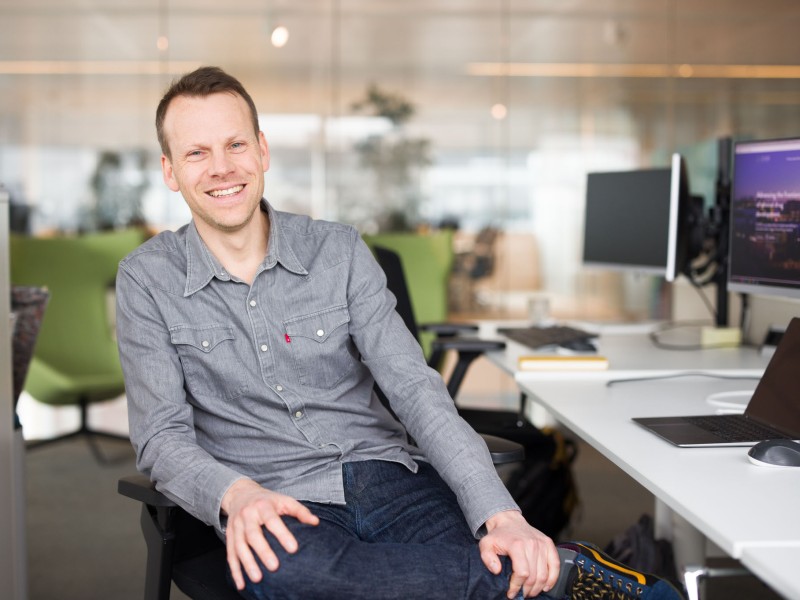
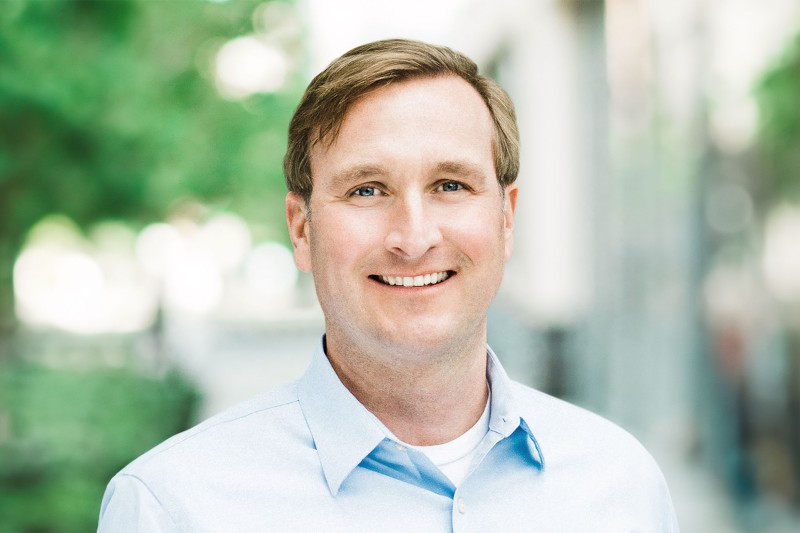
'Curiosity is one of our company's core values, and I'm glad to see it here at CHDR, too' — Dr Karl Hansen, Praxis Precision Medicines
During his visit to CHDR’s facility in Leiden, the Netherlands, Dr Karl Hansen talks about his experiences with CHDR in the development of a new epilepsy drug.
What brought you here, to Leiden and CHDR?
Well, the company I work for, Praxis Precision Medicines, is a Boston-based neurology company, with a big focus on epilepsy. And it was an epilepsy compound that brought us here to work with CHDR. The first-in-human studies with our compound were done here. CHDR is quite well-known in the Boston area. And their approach to early drug development, with the NeuroCart® assays for different aspects of neurological function tests along with their EEG expertise are a good match for our company, which is also very science-driven.
The results from these phase 1 studies were promising. We established that the compound is really safe and well tolerated, even at concentrations well above what we think we'll need to treat patients. Additionally, the EEG data clearly showed that the compound reached the brain. That's always a big thing in neurology, as you know that the brain is designed to actively keep out all kinds of chemicals. We were able to show that the drug penetrates the blood-brain barrier quite nicely and changes the EEG. In other words, we had a nice pharmacodynamic effect right from the outset.
So from there, you went to phase 2, which is also being conducted at CHDR. What can you tell me about this transition?
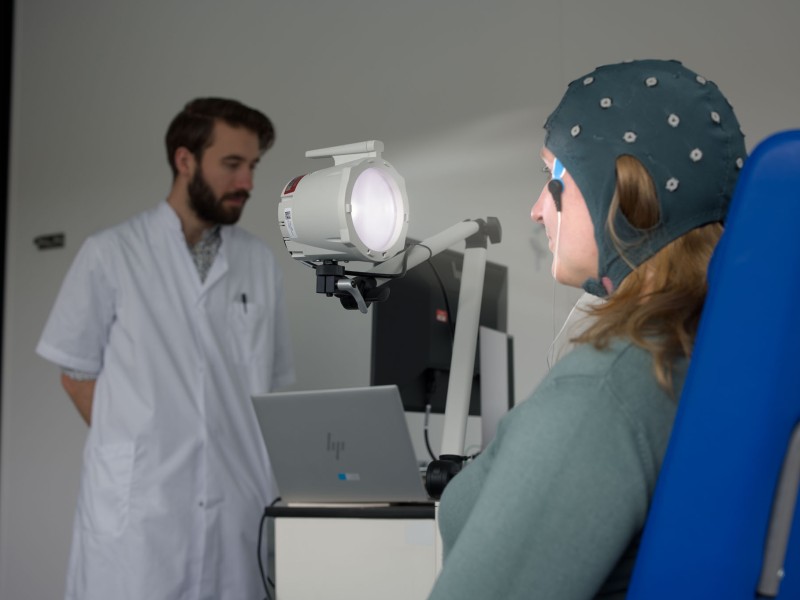
We wanted to study the effects of our compound in photosensitive epilepsy. This is a phenomenon in some epilepsy patients where a flashing light can trigger changes in the EEG and can even stimulate a seizure. It is a well-known model in developing epilepsy drugs. First, you find the frequencies that trigger changes in the EEG in the individual patient, and then you see if this changes after you administered the compound in various doses. Sometimes, antiepileptic drugs will completely eliminate photosensitivity, sometimes they reduce it for some or all flash frequencies. For us, it was also attractive to be able to study large sets of EEG data from patients, as well as data from healthy participants.
So it made sense to continue into phase 2 here at CHDR because they already had experience with the compound, and we could use the same EEG setup. And we knew that CHDR have a general interest in models for drug development, right? So we discussed it with them. And even though they didn't have experience with the photosensitive epilepsy biomarker, they were very keen to see whether we could make it work. It also turned out that Prof. Dorothée Kasteleijn-Nolst Trenité, one of the world experts in photosensitive epilepsy, lives about an hour from Leiden and was willing to join our project. She helped them get up to speed. It didn’t need much in terms of investment, just a strobe light. EEG machines already have a plug for a photostimulator as it's a common part of a clinical workup.
And how is the study going so far?
Things are going well. It was a challenge to recruit patients, and I'm aware of the fact that we were really pushing CHDR to move forward. As a company, we're kind of obsessed with getting results as fast as possible, as we know that patients are waiting for better medication. And I think through all of it, CHDR were just very receptive and open-minded. They did everything they could to accommodate our requests. So we've been able to get the study up and running and we've made really good progress conducting it.
What is your impression of CHDR's approach to early phase drug development and patient studies?
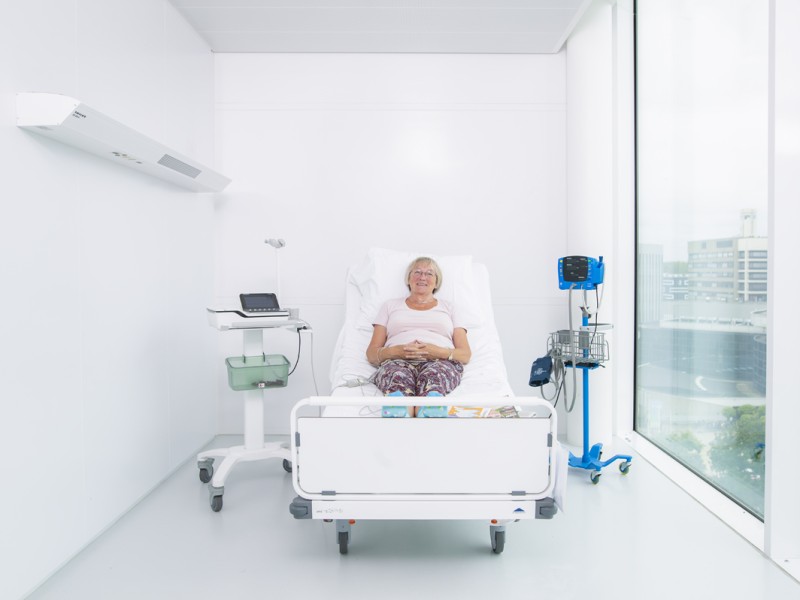
Dorothée said she was impressed with just how professional and how great they are with the patients here at CHDR. You know, these are people with photosensitive epilepsy, so they've been avoiding flashing lights their whole life. And you're asking them to sit and be exposed to light flashes for a long period of time. So that's a challenge, both for those who conduct the study and for the patients themselves. I really admire the patients who did this, for their courage and willingness to contribute to the development of a new therapy.
What I also really like about CHDR is their commitment to advancing clinical science and experimental medicine and their overall open-mindedness and curiosity. For us as a company, curiosity is one of our core values, and it’s nice to see that they share that value.
Interested in learning more?
More articles from Developing drugs