Dopamine, novelty and motivation: an academic collaboration
What is the role of dopamine in novelty-induced memory and cost-benefit decision making? In a collaborative effort, researchers from Leiden University and CHDR seek to explore this question.
This study, which will be conducted in 2024, will build a bridge between pharmacology and the behavioural sciences,' says Soma Makai-Bölöni, Clinical Scientist at the Biomarker Engineering and Analytics (BEA) and Psychiatry groups. Leiden University's Health, Medical and Neuropsychology research group approached CHDR because they wanted to investigate the differential effects of dopamine in novelty-induced memory. ‘After an initial discussion, it turned out there were enough common interests to merit a collaborative project,’ says Makai-Bölöni.
Novelty-related memory boosts and dopamine
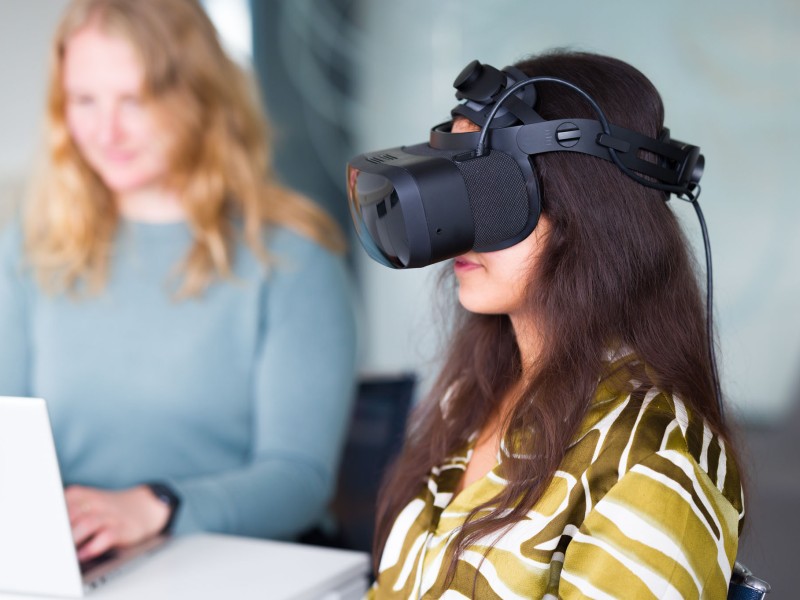
Things that are novel catch our attention more than things that are familiar. Interestingly, previous work has shown that the effects of novelty are generalisable: not only do we remember novel information better, unrelated events that occur in the temporal vicinity of a novel event are also remembered better. These novelty-induced memory benefits are central to the scientific work of Dr Judith Schomaker, Assistant Professor at Leiden University in the Health, Medical and Neuropsychology section. She is especially interested in spatial novelty and its effect on memory. She and her colleagues developed a virtual reality (VR) task to study this effect in more detail. This method will also be used in the collaborative project. Her colleague, Assistant Professor Dr Franz Wurm of the same group focuses on the role of dopamine and noradrenaline in value-based decision making and learning.
Dopamine is a neurotransmitter with a variety of functions. It is involved in salience, focusing attention on stimuli related to motivation and reward, but it also crucially important in executive functions, in motor control, in the release of the hormone prolactin and in various other CNS functions. There are at least five different receptors for dopamine in the brain. ‘We are particularly interested in the role of the D1-D5 receptors in novelty-related memory,’ says Makai-Bölöni. ‘We plan to conduct a double-blind, three-way, crossover study to administer a dopamine agonist, an antagonist and a placebo to our study participants. Together with our colleagues at the university, we will investigate dopamine-dependent changes using the VR-task to induce novelty-related memory benefits. It will be interesting to collaborate in this way and explore new ways to study pharmacological effects on brain functions.'
Cost-benefit decision making
Deciding whether an action is actually worth taking is a key element in the expression of human motivation. The D1-D5 dopamine receptors, that are the focus of the study’s pharmacological intervention, play an important role in motivation. However, how the differential dopamine receptor activation influences actual choice is less well understood. The study with both a dopamine agonist and an antagonist is therefore an excellent opportunity to further validate the Grip Effort Task (GET), a cost-benefit decision making paradigm, as a measure of the pharmacological effects on motivation and reward valuation. The GET, which looks at whether a study participant is willing to exert physical effort for a given monetary reward, is currently being developed by the BEA group. Makai-Bölöni: 'We welcome this opportunity to test this method in the context of dopaminergic effects.'
Interested in learning more?
More articles from Developing methods