Pharmacological surprises with a well-known psychedelic compound
DMT (N,N-Dimethyltryptamine) is a potent yet short-acting serotonergic psychedelic and a known 5-HT2A receptor agonist. Although DMT has been used for centuries—most famously as the active ingredient in ayahuasca, a traditional plant brew from the Amazon rainforest—it is still exciting to investigate pharmacologically.
‘If you ever needed proof of the importance of studying psychedelic drugs systematically by applying a modern-day clinical drug development approach, our DMT studies are a perfect example,’ says Dr Gabriel Jacobs, Research Director Psychiatry at CHDR. Despite its long history and presence in trace amounts in the human brain and various plants and animals, DMT yielded unexpected findings when Jacobs’ team pharmacologically characterised it using CNS biomarkers with proven sensitivity to a broad range of central nervous system-active compounds.
Individual variability and administration rate
One of the first surprises was the significant variability in DMT pharmacokinetics between individuals, particularly among otherwise healthy smokers. ‘Evidence suggests that DMT clearance can vary significantly between individuals, likely due to differences in the activity of the monoamine oxidase (MAO) enzyme, which is responsible for breaking down DMT in the bloodstream,’ explains Jacobs. ‘Although still speculative, smoking may also influence MAO activity.’
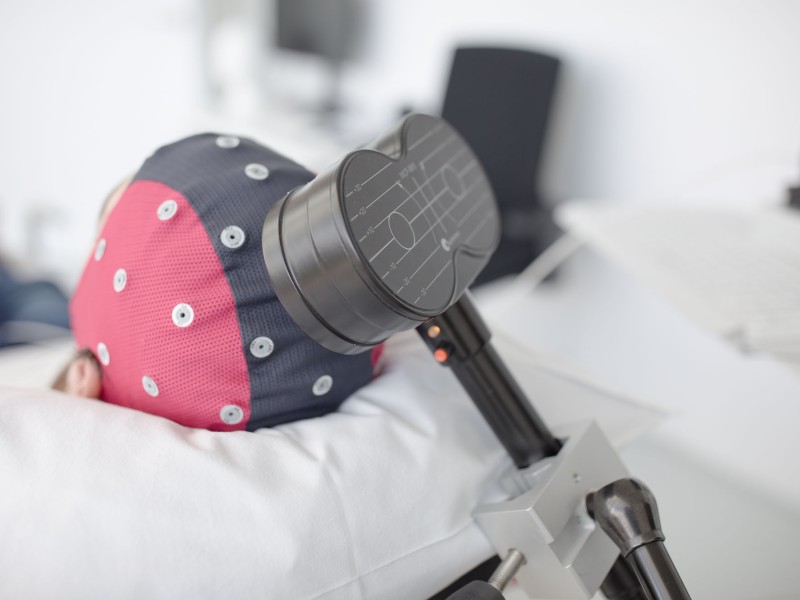
Another key discovery was that the intensity of DMT’s psychedelic effects wasn’t solely determined by plasma concentration. The rate at which plasma levels increased also played a critical role. Unlike most earlier studies that administered DMT as a rapid intravenous bolus over 5 to 10 minutes, Jacobs' team opted for a slower, 90-minute infusion. This approach allowed for a more extended psychedelic experience—long enough to conduct detailed NeuroCart assessments and EEG recordings.
However, the gradual infusion had an unexpected effect: despite reaching plasma concentrations twice as high as those reported in bolus studies, the subjective psychedelic experience was notably less intense. ‘It became clear that how quickly the brain is exposed to DMT—rather than just how much—is crucial in determining the strength of the psychedelic effects,’ says Jacobs.
To test this observation, the team conducted a follow-up study in which DMT was administered as a bolus, followed by a steady-state infusion to maintain plasma levels for an hour. ‘What we found was striking: participants experienced psychedelic effects that were roughly twice as intense at half the plasma concentration compared to the slow-infusion condition,’ says Jacobs. ‘This demonstrates that the administration regimen is just as important as the dose when designing studies with DMT.’
Challenging
Studying DMT was not without obstacles. Many participants were unable to complete the NeuroCart tests during the psychedelic state. ‘It was difficult for participants to follow technical instructions during the experience,’ says Jacobs. ‘To study these substances effectively, we need tools that are less reliant on participant compliance but still sensitive to 5-HT2A receptor activity. We are currently looking into a number of such potential methodologies and we will be doing some validation work in 2025’
A promising derivative
The team also tested a deuterated version of DMT, where some hydrogen atoms are replaced by deuterium. Interestingly, deuterated DMT displayed more robust psychedelic effects at relatively lower plasma concentrations compared to regular DMT. The effects were rapid in onset when administered as an intravenous bolus over 5 minutes and persisted for about 40 min without the need for an extended infusion.
Therapeutic implications
What, then, is the potential value of DMT, or its derivative compounds, in a clinical context? Dr. Gabriel Jacobs explains:
‘Psychedelic-assisted psychotherapy is currently gaining significant interest among drug developers, researchers, and psychiatrists. Both DMT and its deuterated form produce intense but relatively short-lived psychedelic experiences, which could offer practical advantages in a therapeutic setting—if this treatment model proves to be both effective and safe.’
Compared to other 5HT2A agonists like psilocybin, mescaline, or LSD, which induce psychedelic states lasting several hours, DMT’s brief duration could make it particularly well-suited for clinical use. ‘A psychotherapy session incorporating DMT could be significantly shorter,’ Jacobs notes, ‘potentially making it a more scalable and cost-effective alternative for mental health care.’
Interested in learning more?
More articles from Developing drugs