Machine learning to unlock insights from deep phenotyping data
The deep phenotyping approach used by CHDR’s Dermatology Group yields a multitude of data. To analyse and interpret this data, the group now uses a machine learning approach.
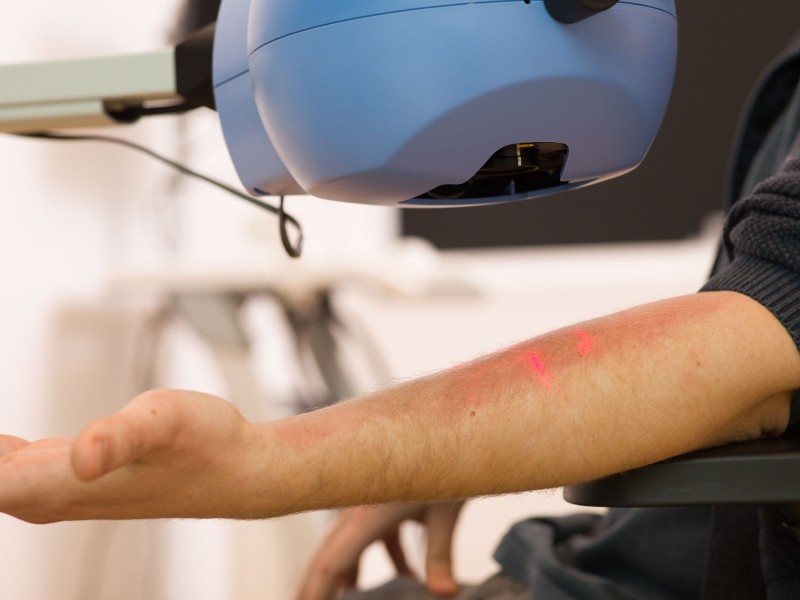
A quick tour through the equipment used in CHDR's Dermatoolbox shows that there are many different ways to study skin lesions — from sensitive cameras to laser speckle contrast imaging, multispectral imaging and thermography. Each tool contributes unique data. Complementing this are the various laboratory analyses, including immunological profiling from biopsies and suction blisters, as well as microbiome, proteomics, transcriptomics metabolomics and lipidomics.
‘We collect an incredible amount of data from just a few cubic millimetres of skin,’ says Prof Robert Rissmann, Research Director Dermatology. ‘Our goal is to understand what’s happening within a lesion—why diseased skin exists right next to healthy skin, for instance—and, most importantly, to measure treatment effects. The next step is finding biomarkers for trial stratification, and ultimately, to predict which treatments will be effective for individual patients. The challenge is filtering out meaningful signals from the background noise and natural variability.'
Translating data into insight
A concrete example of this approach is the ongoing research into cutaneous T-cell lymphoma (CTCL), a rare form of skin cancer. This study is conducted by Selinde Wind in collaboration with Prof. Maarten Vermeer and his team at the Department of Dermatology at Leiden University Medical Center (LUMC). CTCL is one of six diseases being investigated as part of the Next Generation Immunodermatology consortium study named SKINERGY. Because LUMC is the top referral centre in the Netherlands for this condition, a relatively large cohort of patients can be included in the study. CTCL patients who consent to participate are regularly examined with the DermaToolbox. This provides an in-depth overview of the progression of their skin lesions over time, while they continue to receive treatment according to the latest insights from LUMC's dermatologists.
‘This study serves as a prelude for the much larger study starting next year within the broader immunodermatology consortium’, says Rissmann. ‘We’re gaining not only practical and logistical insights but also a clearer understanding of the data analysis challenges we face.'
Harnessing machine learning
As part of their deep phenotyping analysis of more than 70 CTCL patients, Rissmann and his team are planning to apply new visualisation tools as well as machine learning to mine the data for novel insights. ‘We’re using these methods to uncover new biomarkers and to better understand the characteristics of CTCL and its response to treatment,’ Rissmann explains. ‘Ultimately, we aim to identify a concise set of biomarkers that can be used in two ways: first, to support drug development by evaluating new therapies in clinical research, and second to guide more personalised treatment decisions in clinical practice.'
Interested in learning more?
More articles from Developing methods