Viral infection model successfully implemented
CHDR's Infectious Diseases Group implemented a controlled human infection model (CHIM) for rhinovirus in 2024.
'Establishing a CHIM for a virus is challenging, both in terms of regulations and safety and in terms of clinical know-how,' says Dr Ingrid De Visser-Kamerling, Research Director of Infectious Diseases. We achieved this milestone through close collaboration with infectious disease specialist Prof. Meta Roestenberg of Leiden University Medical Center and her team. The most challenging part was the preparation phase—once the study began, everything proceeded quite smoothly'
Common cold
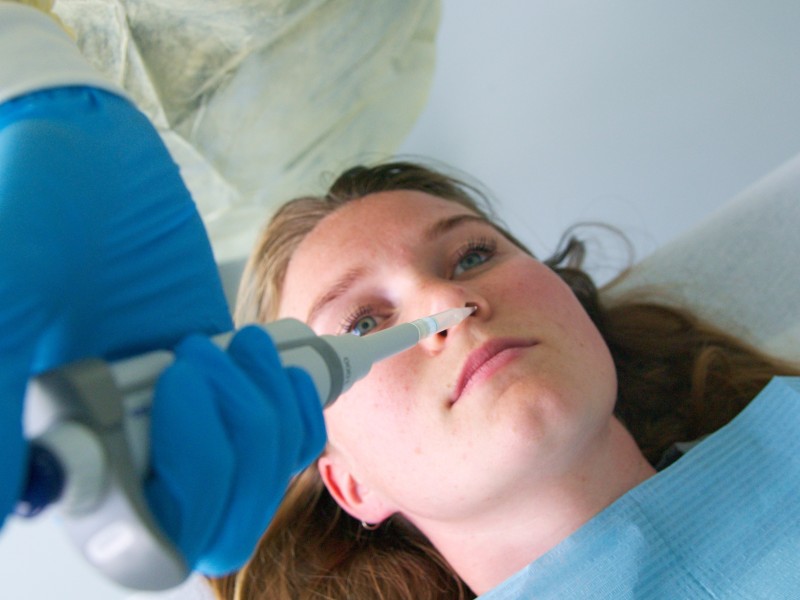
In this study, healthy study participants were inoculated with a standardised dose of rhinovirus administered into the nose. All relevant standard operating procedures, including protective clothing, were strictly followed to protect staff from accidental exposure. ‘Even though the rhinovirus is generally harmless, protection is crucial to safeguard our staff against the common cold. For us it was also an opportunity to apply all of our safety procedures,' De Visser said. Given the low risk associated with rhinovirus, the study was safely conducted in an outpatient setting. After extensive instructions, the study participants were allowed to go home, under the condition that they adhered to strict hygiene protocols.
For five days, participants visited CHDR for daily measurements, including nasal sampling. Results confirmed the model’s effectiveness: over 90% of the 62 participants who received the virus were successfully infected, and 60% also displayed symptoms. Operationally, the study ran very efficiently. De Visser: ‘All participants complied with our instructions. During their visits, they put on a face mask and disinfected their hands. We’ve demonstrated that it is possible to conduct such a studies in an outpatient setting Of course, as we move forward with other viruses, such as influenza, study participants will remain quarantined in our facility, for medical reasons and to guarantee environmental safety.'
Interested in learning more?
More articles from Developing methods