Developing and validating biomarkers for chronic pain
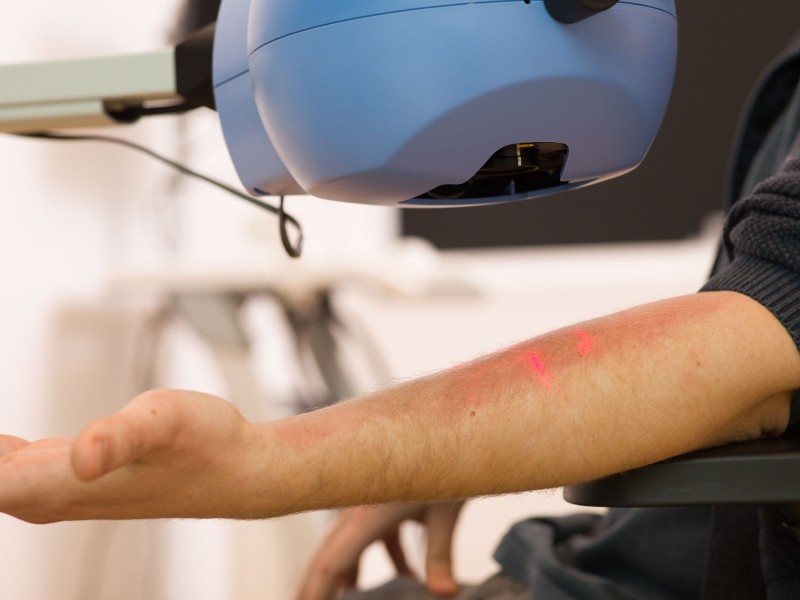
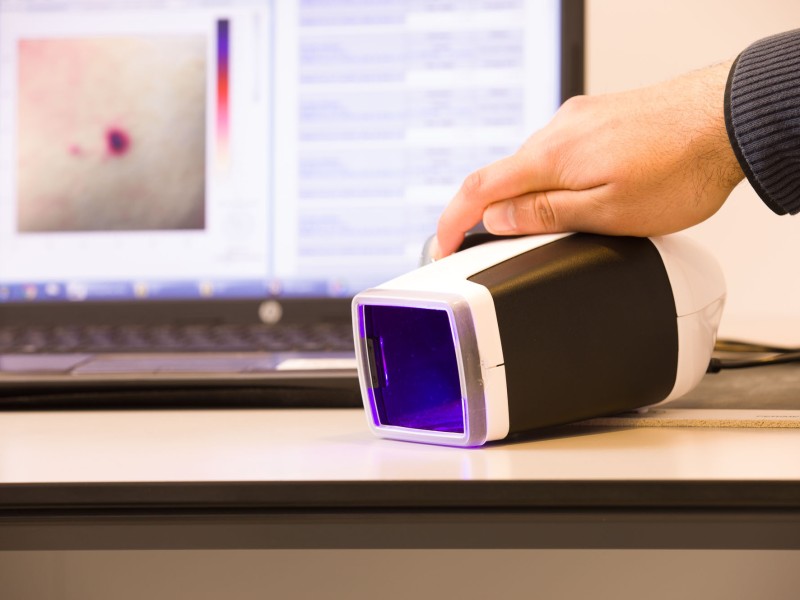
In the coming years, CHDR’s PainCart® will be expanded to include new measurements that evaluate the underlying mechanisms which are altered in patients with chronic pain.
Chronic pain is one of the most common health conditions worldwide. A recent survey in the Netherlands showed results similar to previous research in the United States: one in five people suffer from chronic pain lasting three months or longer. The high prevalence of chronic pain is one of the drivers of the opioid crisis in the United States and other countries , underscoring the urgent need for safer, non-addictive treatment options.
To address this need, researchers are actively exploring new compounds that could offer effective pain relief. Some of these drugs will show effects in healthy study participants, as measured by the various pain models currently available within the PainCart. However, many next-generation therapies are designed to target the specific pathophysiological mechanisms underlying chronic pain—mechanisms that may not be active in healthy individuals.
‘A drug that works by modifying these mechanisms may not have measurable effects in healthy volunteers,’ explains Dr. Marieke Niesters, Associate Research Director Pain. ‘That’s why I want to expand the PainCart with biomarkers that reflect these mechanisms, and to conduct more studies in patient populations.’
Mapping the mechanism
Chronic pain syndromes are caused by changes in the central and peripheral nervous system. In some cases, neuroinflammation—characterised by the activation of immune cells in the nervous system—plays a key role. In others, the issue lies in an imbalance between excitatory and inhibitory signaling within central pain pathways. A number of the mechanisms through which this happens are now known, but according to Niesters, the origin of chronic pain is still largely uncharted territory.
‘What I dream of as a pain specialist is a set of biomarkers that will allow us to determine exactly what has changed in an individual patient's peripheral and central nervous system, so that we can administer specific drugs that are effective for that patient,’ says Niesters. ‘Unfortunately, we are not there yet, but at CHDR, we are committed to validating biomarkers that will allow us to measure neuroinflammation, facilitation and disrupted inhibition in patients.’
Quantifying pain facilitation
One approach Niesters is pursuing involves measuring pain facilitation through a process called "wind-up"—a phenomenon in which repeated pain stimuli lead to amplified responses in the central nervous system.
The facilitation (amplification) of pain stimuli in the central nervous system can be studied using a phenomenon known as wind-up, in which the intensity of a pain stimulus is amplified by previous stimuli. This can be tested using a simple protocol: a participant is asked to rate the pain intensity of a single stimulus, such as a pinprick, on a visual analogue scale. The same stimulus is then repeated ten times in rapid succession, and the participant rates the final stimulus.
‘In healthy volunteers, the pain rating typically stays about the same,’ Niesters explains. ‘But in chronic pain patients, the rating often increases significantly with repeated stimuli, indicating abnormal pain facilitation.’
By standardising and validating such measurements, Niesters and her team want to measure the effect of drugs specifically aimed at inhibiting pain facilitation. ‘We’ve already developed detailed pharmacological profiles for several painkillers using PainCart in healthy volunteers,’ she says. ‘Now, by integrating these new patient-specific measurements, we can further refine those profiles and establish more meaningful benchmarks for evaluating future treatments.’
Interested in learning more?
More articles from Developing methods