Investing in future success
With the opening of a unit in Twente, the NeuroKit® and the development of a wide range of research methods, CHDR is preparing for future activities and new clients.
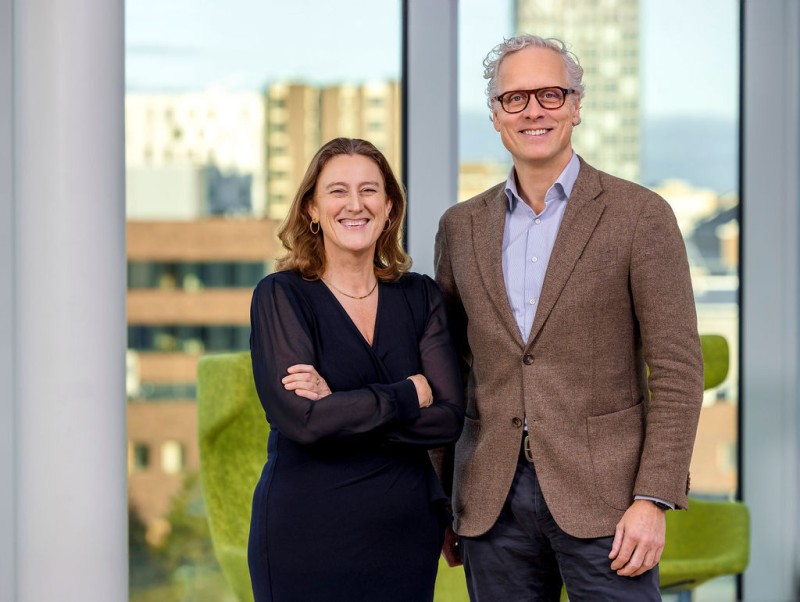
‘There is a new optimism throughout the organisation, and rightly so,’ says CEO Geert Jan Groeneveld. ‘Our portfolio for next year is well filled and we are working on some exciting new things.’ Anouk de Jong, CHDR’s CFO: ‘We look to the future with confidence. We have defined our strategy for the coming years, and we are now working hard to implement those plans.’
Market developments
The Board is optimistic about the future but also acknowledges that 2025 was not particularly successful from a commercial point of view. This is mainly due to market fluctuations. Globally, there is some hesitation among investors in the biotech companies that make up a significant part of CHDR's client base. ‘Based on market prospects and the unwavering demand from the industry, we are convinced that this decline is just temporary,’ says Groeneveld. ‘There are still many unmet medical needs and a plethora of new compounds that need to be developed into medicines. Due to the ageing population in most countries, the number of patients with various conditions will further increase, particularly in areas where we are active, such as the central nervous system and immunology. We are therefore busy preparing for future growth. As the French say: “Reculer pour mieux sauter” – taking a step back to jump even further.’
Investing in the future
‘The big news for 2025 is, of course, the opening of our new unit in Twente,’ says De Jong. ‘It was quite an event, which took a lot of preparation. And what struck me is that it was all done by our own staff. We did not need to hire external consultants to get to this point.’ With this new unit, CHDR is expanding its future capacity. The unit will also be more easily accessible to patients and healthy participants in the east and north of the country and strengthen the collaboration with the Technical University and the large teaching hospital Medisch Spectrum Twente. In the short term, the Twente unit will primarily be used to validate methods in self-funded studies. Groeneveld: ‘We want our unit in Twente to grow organically, in terms of both size and content.’
CHDR continues to invest in the development and validation of new methods, anticipating the needs in the market. The internal clustering of research groups around two major themes, Neuroscience and Immunology & Inflammation, strengthens the synergy and coherence in method development. Groeneveld: ‘This is most evident in immunology, but we also have methods in the field of CNS that are applied in various areas, such as NeuroCart® and transcranial magnetic stimulation.’
USA
One of the pillars of CHDR’s strategy for the coming years is a stronger focus on collaboration with companies in the United States, in addition to various connections in Europe and Asia. ‘The vast majority of new compounds are currently being developed in the USA,’ says Groeneveld. ‘If we want to expand our customer base, it makes sense to focus on the USA, particularly the Boston area and the West Coast.’ ‘In our budget, we have allocated funds so that our research directors can fly to the States on a regular basis,’ says De Jong. ‘After all, they are the ones our clients want to talk to.’
The NeuroKit®, CHDR's newly developed mobile version of the well-known NeuroCart® test battery, will also be used primarily in the United States in the coming years, thanks to a strategic partnership with Evolution Research Group and Lotus Clinical Research. Groeneveld: ‘With our new strategy, we invite American companies to do research with us in the Netherlands, and with the NeuroKit, we will bring a piece of CHDR’s expertise and added value to the United States. I’m looking forward to the coming years, in which we will contribute even more to science-based early-phase drug development. Patients worldwide are expecting novel treatments, and we are ready to do our part.’
Interested in learning more?
More articles from 2025 in perspective