Favourable results for AMPA-PAM osavampator
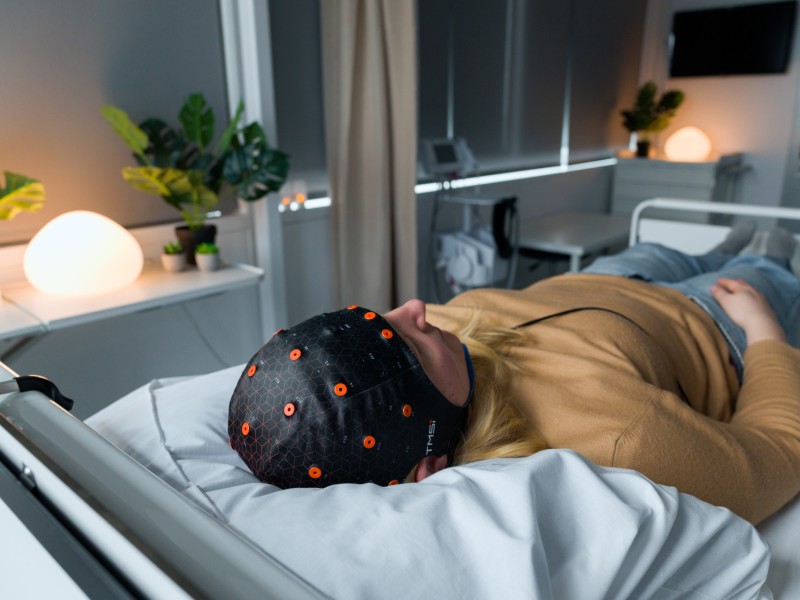
Using transcranial magnetic stimulation (TMS) and NeuroCart® measurements, CHDR provided insights into the mechanism of action of osavampator in humans. The drug has recently been shown to be effective against major depressive disorder.
‘With this compound, we did one of our first studies with TMS as an experimental model to measure the effects of drugs on cortical excitability,’ says Dr Gabriel Jacobs, Research Director Psychiatry. ‘It was a very interesting study, as we could demonstrate how the preclinical results in rats translated to healthy humans. In the same study, we also characterised its functional CNS effects using the NeuroCart.’ Osavampator, until recently known by its developmental code name, is a positive allosteric modulator (PAM) of the AMPA glutamate receptor. This receptor is involved in cognition and mood regulation. Allosteric modulation of this receptor is safe, whereas direct agonism with other AMPA-ergic compounds has been associated with unwanted CNS activation.
Publication
Jacobs' team became involved in the development of osavampator in 2019, shortly after Takeda Pharmaceutical Company, who had developed the compound, had conducted its first clinical studies. 'We met with Takeda's development team in Cambridge, Massachusetts, and discussed the possibility of performing additional work using our NeuroCart and experimental TMS model, in an attempt to characterise the compound’s mechanism of action in humans. As this study allowed us to explore the TMS effects of an AMPA-PAM for the first time, the collaboration led to fruitful synergy between Takeda and CHDR,' says Jacobs. Together with Takeda, his team published the results in scientific journals. Their main conclusions were that osavampator demonstrated a stimulatory PD profile distinct from dexamphetamine in humans, and that it demonstrated TMS effects consistent with enhanced cortical excitability, at similar plasma exposures as in rodents. They also concluded that TMS should be considered a valuable translational functional biomarker for AMPA receptor potentiation and, in a broader sense, for assessing the pharmacodynamic profile of glutamate receptor modulators.
Restart
From 2020 onwards, the drug was further developed by Neurocrine Biosciences as part of their strategic collaboration with Takeda. After favourable results had already emerged from their Phase 2 SAVITRI™ study in 2024, the company presented a poster with results at the 38th annual Psych Congress in San Diego in September 2025. These showed that daily administration of osavampator leads to a statistically and clinically significant improvement on the Montgomery-Åsberg Depression Rating Scale (MADRS). For this poster, Neurocrine was honoured with the 2025 Poster Award at the conference. Jacobs: ‘Neurocrine is now conducting a Phase 3 trial, which is of course very exciting. We all hope that this drug can contribute to the treatment of major depressive disorder. As you know, the worldwide prevalence of MDD is still growing, with an enormous impact on the quality of life of individuals and on society as a whole.’
Interested in learning more?
More articles from Developing drugs