Utility function ranks opioids
Researchers at the Pain Group and Leiden University Medical Centre (LUMC) use a utility function to understand the balance between pain relief and respiratory depression for various opioid analgesics.
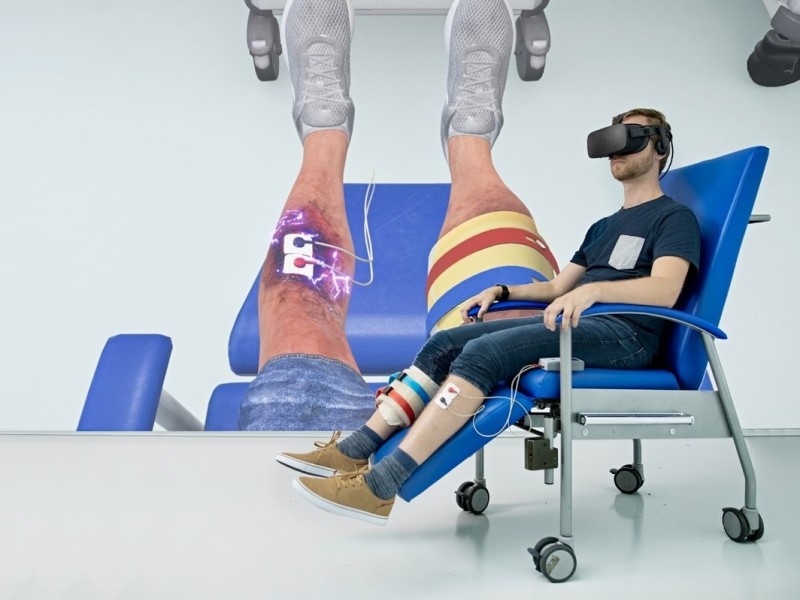
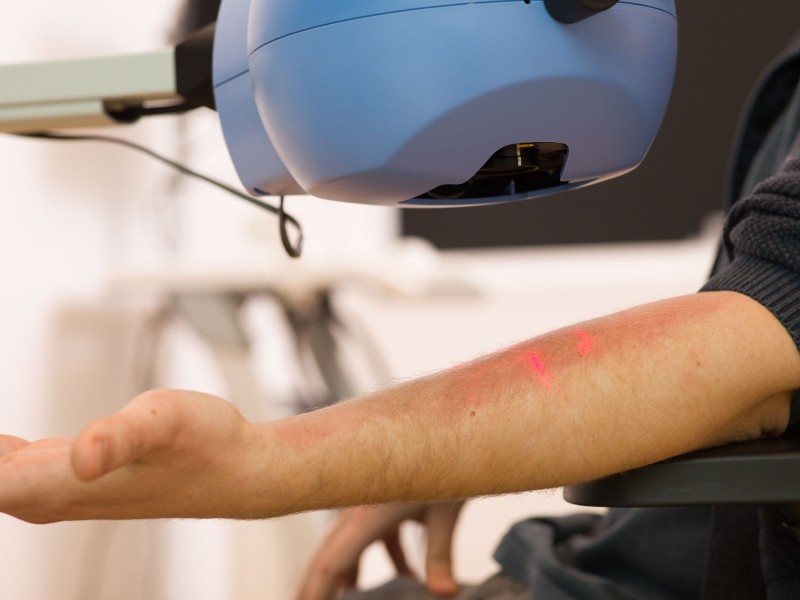
‘Our collaboration with LUMC enables us to accurately study ways to avoid the potentially lethal respiratory depression caused by opioids,’ says Dr Marieke Niesters, Research Director Pain at CHDR and pain specialist in the Department of Anaesthesiology at LUMC. ‘Together we have the tools to map the advantages and disadvantages of opioids. We have CHDR’s PainCart® for measuring pain, while at LUMC we are good at measuring respiratory depression, the most serious side effect of opioids.’
A new element in this collaboration is the application of a utility function. This approach, which originally comes from economics, ranks products based on their beneficial and unwanted effects. In the case of opioids, this involves weighing up the benefits (pain relief) against the negative outcome (respiratory depression). ‘Based on our measurements, we can quantify the likelihood of both benefits and adverse outcomes for a new opioid drug. This makes it easy to determine how suitable it is for use in pain medicine or anaesthesia,’ says Niesters. ‘This approach could also be used for other side effects and other drugs, to weigh up the desired and undesired properties at different dosages.’
Measuring respiratory depression
The anaesthesiology researchers at the LUMC have developed a setup to measure the effect of drugs on respiratory depression. The participant breathes in a special mask, which forms a closed system in which the amount of CO2 in the inhaled air can be precisely controlled. It is used to keep the CO2 content constant with every breath. ‘CO2 is the most important stimulus for the respiratory centre in the brainstem. By keeping the CO2 concentration constant, we know that any changes in respiratory rate are the result of the drug,’ says Niesters. ‘This allows us to investigate the effects of opioids, but also of other compounds such as respiratory stimulants.’
According to Niesters, there are basically three ways to counteract respiratory depression caused by opioids: administering opioid antagonists such as naloxone, administering drugs that stimulate breathing, or developing opioids that cause less respiratory depression. All three of these strategies are currently being investigated. New opioid antagonists are being developed that have a longer-lasting effect than naloxone, and work is underway on drugs that stimulate breathing and on new opioids that hopefully will have less effect on breathing. Niesters: ‘With some opioids, we see a ceiling effect, meaning that higher doses do not cause further respiratory depression. If this happens within the therapeutic window, this provides a safer profile. Using the utility function, we can easily compare different drugs with each other and hopefully contribute to the development of safer drugs.’
Interested in learning more?
More articles from Developing methods