Valuable conclusions from existing EEG data
The Biomarker Engineering and Analytics group made remarkable discoveries after analysing their collection of EEG data, ranging from diurnal changes to ‘brain age’ as a composite biomarker.
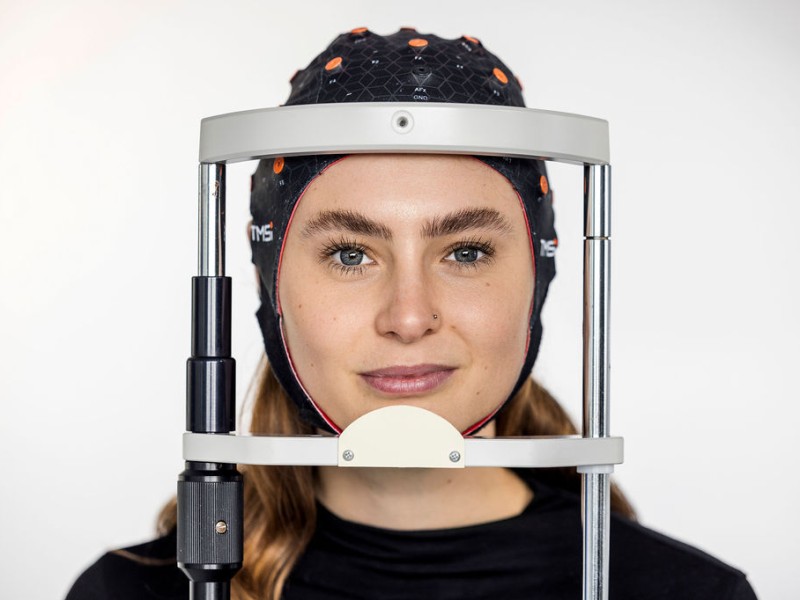
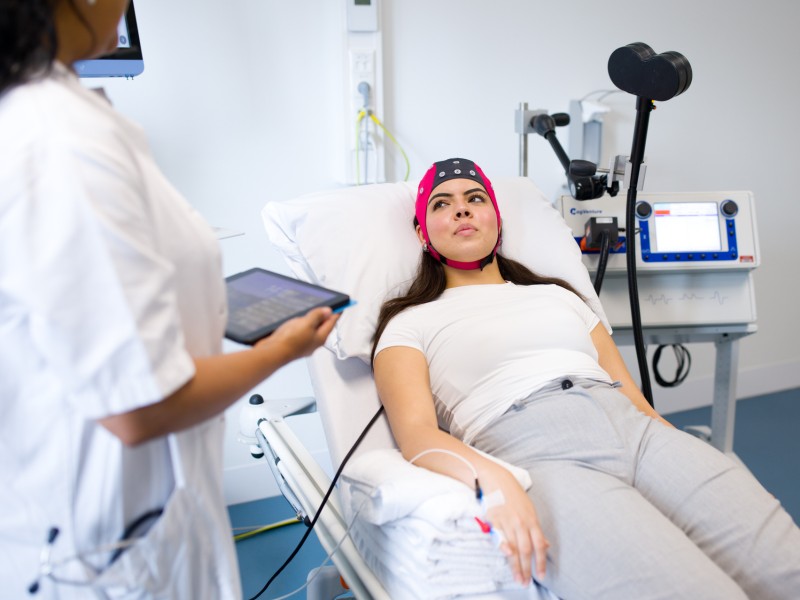
‘Over the past decade, we have consistently worked with the same EEG protocols, so now we have comparable EEG data from several hundred unique study participants, aged 18 to 92. This is a wealth of data that we now study using machine-learning methods and other analytical tools,’ says Dr Robert Jan Doll, Associate Director Biomarker Engineering and Analytics (BEA).
‘Brain age’
In an exploratory study of the available data from approximately 900 unique healthy individuals, Clinical Data Scientists Mihir Kapadia and Naser Hakimi used a machine-learning approach to show that there is a correlation between chronological age and certain biomarkers in the EEG. ‘It is a moderate correlation,’ says Doll. ‘We can predict a person's chronological age with a margin of about seven and a half years.’ This ‘brain age’ appears to be relevant when studying the effects of drugs on the brain. For example, after administration of pregabalin, the measured ‘brain age’ decreased. Doll cautions against the conclusion that a substance such as pregabalin leads to rejuvenation of the brain. ‘We can’t say anything like that. But it does show that this is an interesting composite biomarker that can help us gain more insight into the effects of drugs on the EEG.’
Diurnal changes
From the available EEG data Hakimi and his colleagues were also able to demonstrate that the resting-state EEG changes throughout the day, even in the absence of an active drug. These diurnal changes highlight the importance of careful study design, with measurements taken at exactly the same times of day. For instance, in a cross-over design in which participants receive the active compound in one week, and the placebo several weeks later. The researchers also demonstrated differences in the two EEG measurements that are often taken before the drug is administered. As these measurements are mostly just half an hour apart, diurnal changes may not fully explain the relatively large difference. Doll: ‘I'm not sure why these measurements in pre-dose EEGs show these differences. We ruled out several possible technical sources, so it seems plausible that these differences show a real change in the state of the participant. For example, participants may get used to the situation in the clinical environment and the EEG cap. In any case, it confirms the importance of doing the pre-dose EEG twice, so we have a reliable baseline measurement.’
Interested in learning more?
More articles from Developing methods